Elon Musk’s Starlink Double Standards: Betraying Ukraine, Blaming Washington
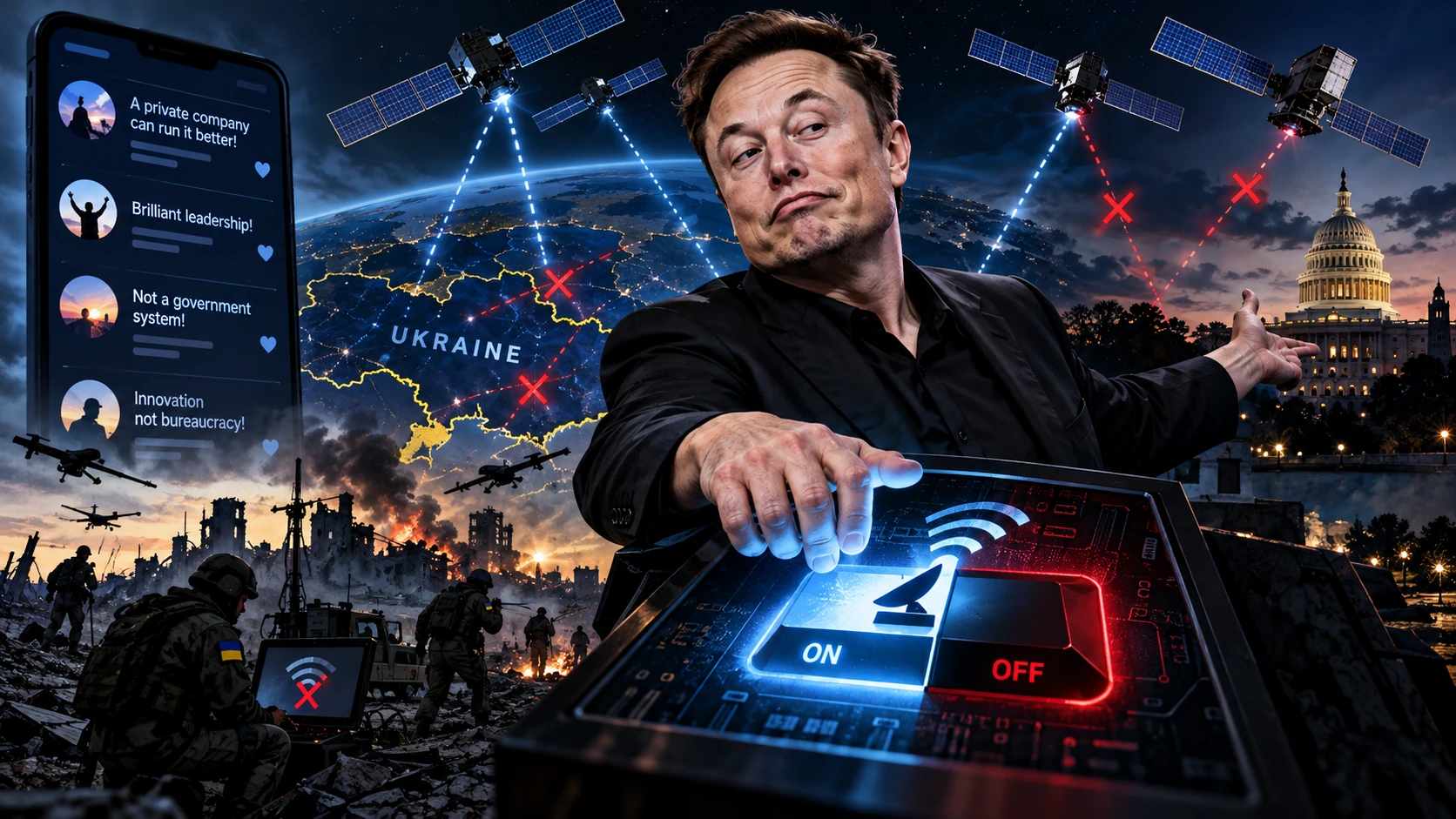
Elon Musk loves reminding the world that he controls the technology keeping Ukraine connected. But when that technology suddenly becomes restricted during a war, the self-proclaimed champion of private enterprise develops a remarkable new talent: pointing toward Washington.
Apparently, owning the infrastructure is wonderful when you’re collecting praise. Taking responsibility when things go wrong? That’s a government problem.
Starlink: The Lifeline That Suddenly Came With a Speed Limit
On October 14, Ukrainian officials reported that SpaceX had imposed unexpected speed restrictions on satellite communications used by their military.
The restrictions reportedly affected terminals moving faster than approximately 160 km/h (100 mph), interfering with drone operations, including systems used to intercept incoming Russian attacks.
For Ukraine, this wasn’t an inconvenience involving slower Netflix streaming.
It was a potentially devastating disruption to technology used to defend its territory, coordinate battlefield operations, and intercept Russian drones.
Ukrainian military technology adviser Serhii Beskrestnov confirmed the restrictions, while President Volodymyr Zelenskyy warned they could result in additional human losses.
And while Ukraine scrambled for answers, the world’s most outspoken technology billionaire had an explanation ready.
Not me. Ask Washington.
The Great Musk Responsibility Shuffle
Responding to the controversy on X, Musk declared:
“Starshield systems are owned and controlled by the US government. Any limits on speed or usage are decided by the US military and ultimately POTUS.”
He also emphasized that commercial Starlink is owned and controlled by SpaceX, with restrictions against offensive military use.
Now, here’s where the story becomes particularly interesting.
Musk isn’t entirely wrong about the distinction between Starlink and Starshield. They serve different purposes, and government contracts can place operational decisions under military authority.
But Ukrainian officials reported problems affecting both services. Musk’s explanation of Starshield’s government control did not fully explain the restrictions affecting commercial Starlink.
Even more remarkably, Axios reported that White House officials told Ukrainian representatives they did not control SpaceX.
So who was responsible?
The billionaire says the government. The government reportedly says it doesn’t control the billionaire’s company.
Meanwhile, Ukrainian soldiers still need their communications restored.
An impressive bureaucratic disappearing act, considering one of the participants supposedly specializes in eliminating bureaucracy.
Remember When Musk Boasted He Could Collapse Ukraine’s Front Line?
Here’s a fascinating trip down memory lane.
In March 2025, Musk publicly claimed:
“Their entire front line would collapse if I turned it off.”
That’s quite an extraordinary statement from someone who now emphasizes that critical operational decisions belong to government authorities.
Back then, Musk wasn’t particularly shy about describing his influence.
He also clashed with Polish Foreign Minister Radosław Sikorski, who raised concerns about Ukraine’s dependence on Starlink.
Musk responded by telling him to be quiet and emphasizing that there was no substitute for his technology.
Apparently, Starlink is indispensable private infrastructure when Musk wants recognition.
When Ukrainian forces experience potentially life-threatening restrictions, however, the conversation suddenly becomes a technical seminar on government procurement.
Convenient.
And This Isn’t the First Starlink Controversy
In July 2025, Reuters published an investigation reporting that Musk had ordered Starlink coverage shut down in parts of Ukraine during a Ukrainian counteroffensive in September 2022.
According to the investigation, the disruption interfered with Ukrainian military communications, drone operations, and battlefield coordination.
Musk had reportedly been concerned about potential Russian nuclear escalation.
There was also the separate Crimea controversy.
In 2023, Musk acknowledged refusing Ukraine’s request to activate Starlink coverage near Sevastopol for an attack against Russia’s Black Sea Fleet.
Importantly, that incident was initially misreported as an active shutdown. The corrected account established that coverage had not been enabled in the requested area.
These incidents demonstrate why the distinction between corporate control, contractual restrictions, and government direction matters.
They also raise an uncomfortable question:
How much influence should one private businessman have over the communications infrastructure of a country fighting for its survival?
Enter Donald Trump, Naturally
Because apparently this controversy needed another layer of political confusion, Musk’s explanation places ultimate authority over Starshield restrictions with President Donald Trump.
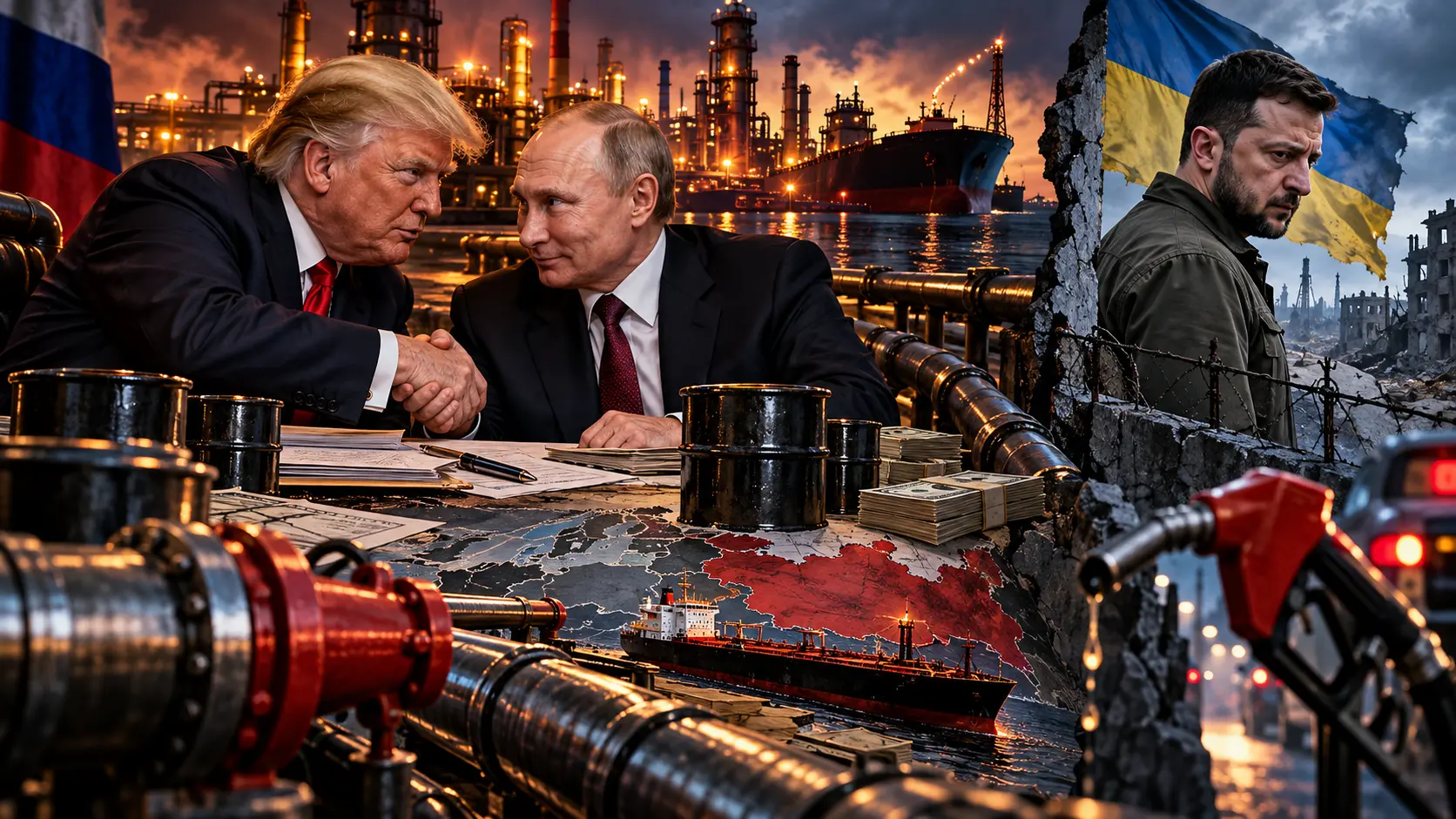
Trump’s administration has been pressuring Ukraine to limit attacks on Russian energy infrastructure while pursuing arrangements with Moscow.
Ukrainian officials have expressed concern that the satellite restrictions may be connected to this broader diplomatic pressure.
However, no publicly established evidence currently proves that Trump personally ordered these specific restrictions.
That distinction matters. Suspicion, however understandable, is not confirmation.
Still, the political optics are extraordinary.
Russia continues attacking Ukrainian infrastructure. Ukraine’s military communications experience restrictions. And the American president, who routinely presents himself as a master negotiator, finds himself at the center of another controversy concerning pressure on Kyiv.
Trump insists his approach can deliver peace. His critics argue that pressuring the invaded country without securing meaningful Russian concessions risks rewarding the aggressor.
For someone so fond of announcing successful deals, the measurable benefits for Ukraine remain decidedly difficult to identify.
Freedom of Speech, Private Enterprise, and Selective Accountability
Musk has built an enormous public identity around independence, freedom, and resistance to government interference.
He owns X, where he frequently promotes his political views and amplifies arguments defending private enterprise.
That makes the current controversy particularly revealing.
There is nothing inherently contradictory about a private company operating commercial services while fulfilling government-controlled military contracts.
The contradiction emerges in the public messaging: celebrating personal control and indispensability when convenient, while appearing to distance oneself from responsibility when the consequences become politically explosive.
One moment, the message is that Ukraine cannot survive without Musk’s technology.
The next, operational restrictions are somebody else’s decision.
And through it all, the people experiencing the consequences have considerably less influence over the system than either Musk or Washington.
Ukraine Doesn’t Need a Billionaire’s Mood Swings
To be fair, SpaceX has provided substantial communications capabilities that have helped Ukraine since Russia’s full-scale invasion in February 2022. Musk also supported measures earlier in 2026 restricting Russian forces’ unauthorized use of Starlink.
Those contributions deserve recognition.
But providing indispensable technology creates a serious responsibility to communicate clearly about its limitations, governance, and reliability.
Ukraine cannot build national defense planning around corporate uncertainty and unanswered questions about who controls the switch.
And Europe cannot ignore the strategic danger of depending so heavily on infrastructure whose operational decisions may be influenced by American politics.
As Reuters reported on October 14, viable European replacements remain limited, and transitioning to alternatives would require significant investment and time.
The Bottom Line
The October 2026 restrictions have exposed a troubling combination of corporate power, military dependence, and political ambiguity.
Musk says Starshield restrictions are Washington’s responsibility. Ukrainian officials report disruption across services. The White House has reportedly distanced itself from control over SpaceX.
Until the actual decision-making chain is independently established, claims of deliberate betrayal remain allegations rather than proven conclusions.
But one thing is painfully clear:
When technology becomes essential to defending a nation, accountability cannot be treated as an optional subscription feature.
And perhaps the next time Elon Musk boasts about holding Ukraine’s communications lifeline in his hands, someone should ask whether that also includes taking responsibility when the signal disappears.
Because apparently, in the billionaire edition of accountability, the most important feature isn’t connectivity.
It’s plausible deniability.