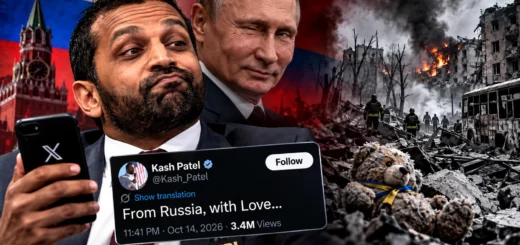
MAGA Hypocrisy: When Trump Does It, It’s Genius
How Donald Trump turned political hypocrisy into a loyalty test, convinced his followers that accountability is optional, and made the Republican Party’s supposed principles disappear faster than his promises.
There was a time when Republicans claimed to stand for fiscal responsibility, constitutional limits, family values, national security, and respect for the presidency.
Then Donald Trump came along, and apparently all those principles were replaced with one extremely sophisticated political philosophy:
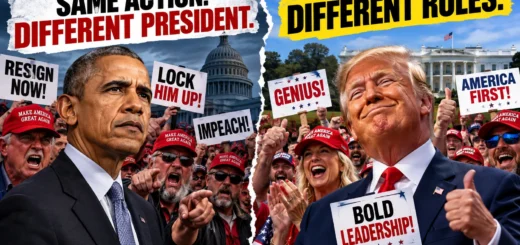
If Trump does it, it’s brilliant. If a Democrat does it, it’s an impeachable offense.
Welcome to the MAGA universe, where hypocrisy isn’t a character flaw. It’s practically a membership requirement.
1. Executive Orders: Dictatorship for Democrats, Leadership for Donald
Remember when Barack Obama supposedly ruled like a king because he used executive orders?
Conservative commentators warned about government overreach, authoritarianism, and the destruction of American democracy.
Enter Donald Trump, whose second administration began with a record-breaking barrage of executive orders.
Suddenly, exercising extraordinary presidential authority wasn’t tyranny. It was getting things done.
According to a 2025 Pew Research Center survey, 49% of Republicans believed Trump was attempting to exercise more power than previous presidents. Among Republicans, 24% considered that increased power good for the country, compared with 14% who considered it bad.
Apparently, executive overreach is dangerous only when the executive isn’t wearing a red tie.
2. Classified Documents: Lock Her Up, Unless His Name Is Trump
Hillary Clinton’s email controversy inspired years of Republican outrage.
“Lock her up!” became a rallying cry.
MAGA supporters insisted that mishandling sensitive government information was an unforgivable threat to national security.
Then Trump faced federal charges over classified documents retained at Mar-a-Lago, including allegations of obstructing government efforts to recover them.
Rather than demand the same accountability, loyal supporters embraced Trump’s claims of political persecution.
The federal case was eventually dismissed, and prosecutors dropped their appeal after his 2024 election victory. That outcome did not establish that his handling of the documents was proper.
By October 2026, former FBI personnel involved in the investigation were suing over their dismissals, alleging political retaliation.
The new national-security doctrine appears to be wonderfully simple:
Classified documents in a Democrat’s possession? National emergency. Classified documents in Trump’s bathroom? Presidential interior decorating.
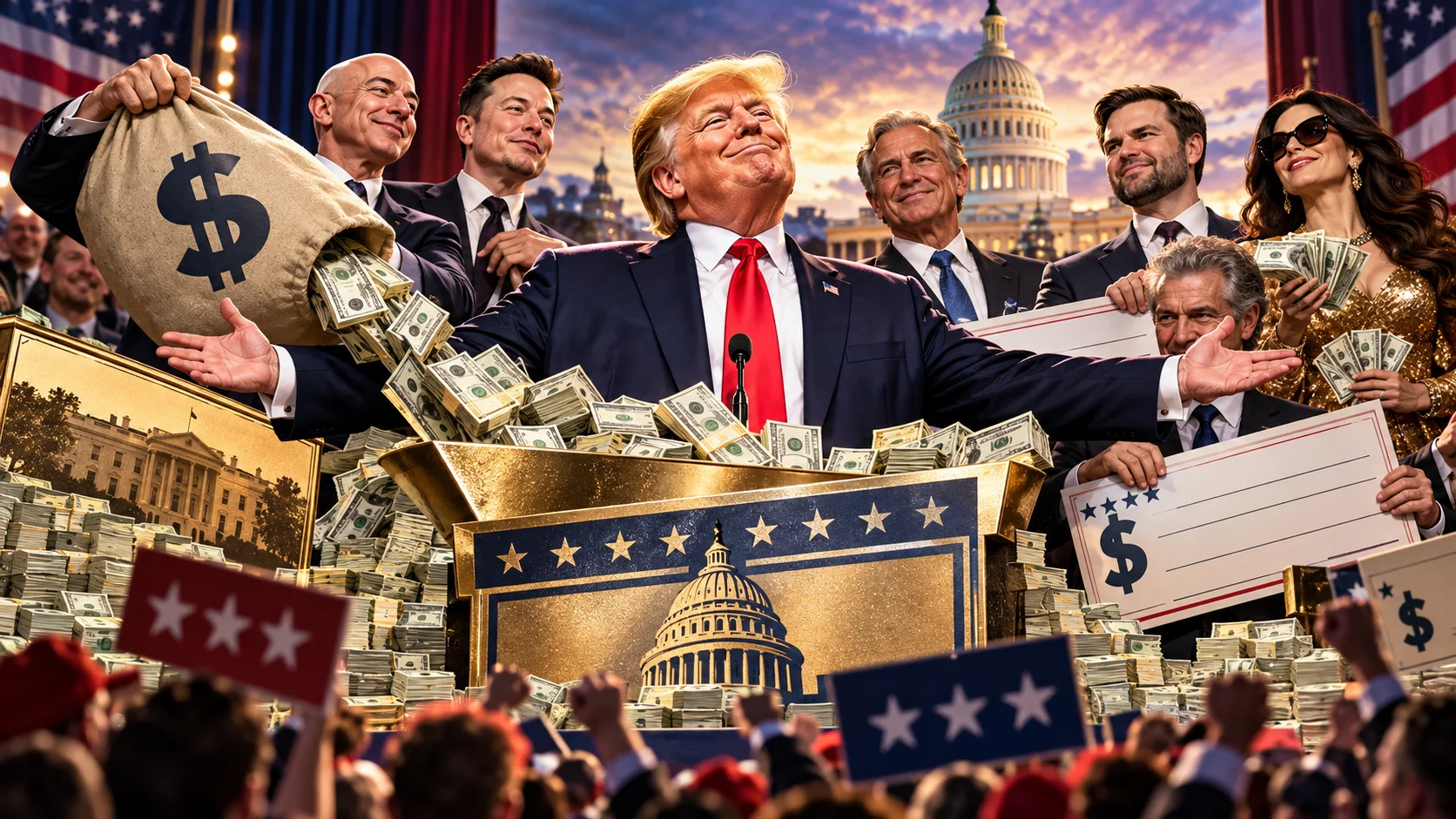
3. Family Enrichment: Corruption for Thee, Business Opportunities for Me
For years, Republicans scrutinized Hunter Biden’s business dealings, demanding investigations into whether the Biden family had profited from political connections.
And rightly so, in principle. Potential conflicts of interest involving presidential families deserve scrutiny.
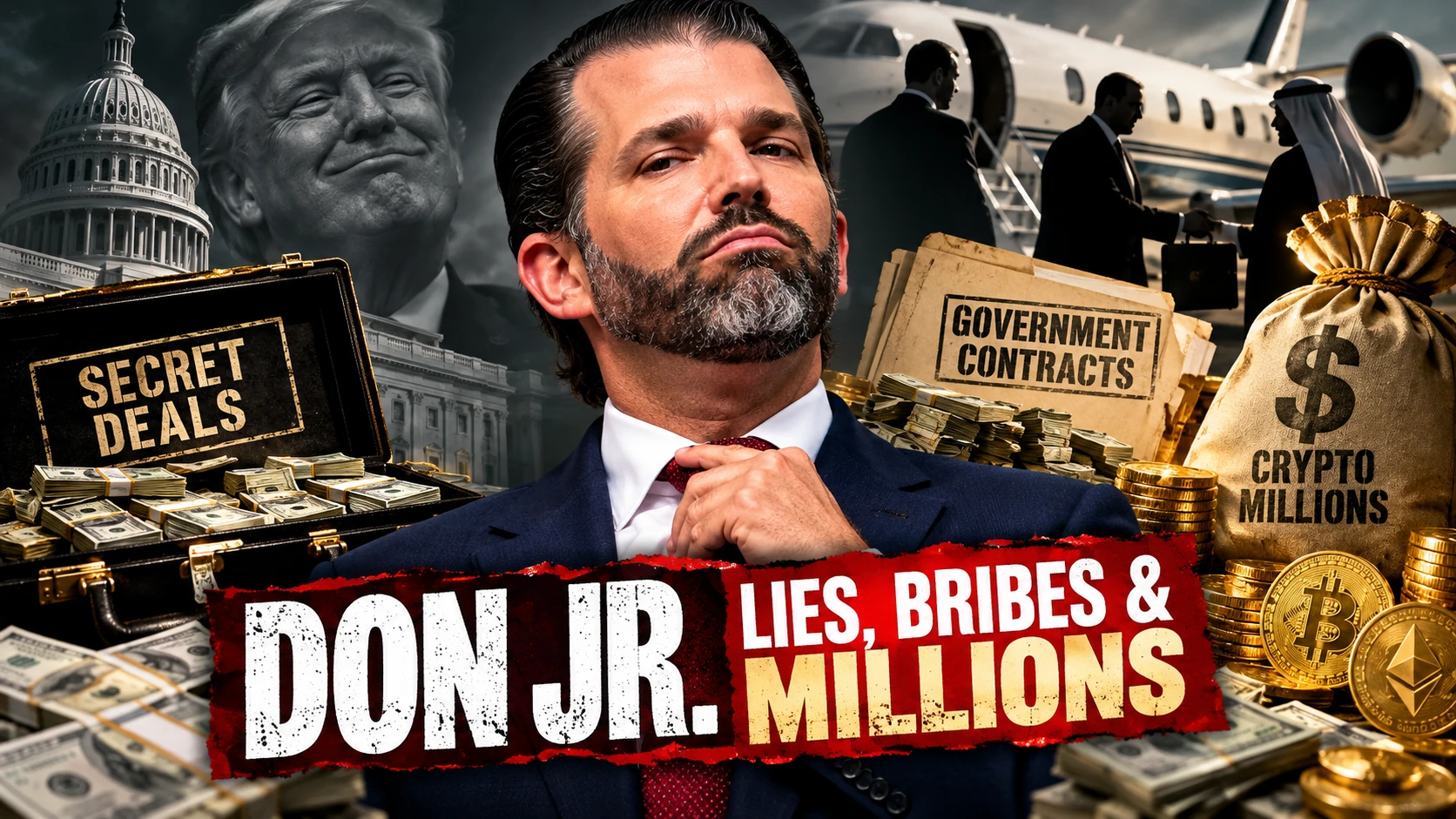
But what happens when the Trump family develops international cryptocurrency ventures attracting major foreign investment?
Reuters documented how the Trump family’s crypto businesses generated enormous revenue and attracted investments from overseas interests, raising serious conflict-of-interest questions. The Trump Organization maintains that its activities are legal and denies wrongdoing.
Now imagine Barack Obama’s family launching a cryptocurrency business while he was president, with foreign investors pouring money into it.
Would MAGA celebrate his entrepreneurial brilliance?
Or would congressional Republicans demand investigations before the first transaction had cleared?
We can only speculate about that hypothetical. But the difference in political scrutiny is difficult to miss.
The Trump family’s business interests are apparently capitalism at its finest, while similar questions surrounding political rivals become proof of a criminal empire.
Funny how quickly the definition of corruption changes when the potential beneficiary shares your favorite president’s surname.
4. Family Values: Now Featuring Presidential Convictions
The Republican Party once marketed itself as the guardian of traditional morality.
Character mattered. Personal responsibility mattered. Presidents were supposed to set an example.
Then Republicans nominated and elected a man who, in May 2024, was convicted on 34 felony counts of falsifying business records.
Trump denied wrongdoing, and his supporters frequently characterized the prosecution as politically motivated.
Whatever one thinks of that prosecution, the contrast with decades of conservative moral messaging is extraordinary.
Imagine Bill Clinton running for president with 34 felony convictions. Would the religious right respond with enthusiastic applause and commemorative merchandise?
Some MAGA supporters seem to have discovered a remarkably flexible moral compass. It always points toward Mar-a-Lago.
5. Back the Blue, Unless the Police Are Standing in Trump’s Way
For years, conservative rallies echoed with declarations of support for law enforcement.
Then January 6, 2021, happened.
A violent mob attacked the U.S. Capitol, assaulted police officers, and attempted to disrupt the certification of Joe Biden’s election victory.
On January 20, 2025, Trump granted sweeping clemency to roughly 1,500 January 6 defendants, including people convicted of violently attacking police officers.
Suddenly, some of the loudest defenders of law enforcement were celebrating presidential pardons for people who attacked law enforcement.
Imagine Biden pardoning hundreds of people convicted in a violent attack on Congress, including those who assaulted police officers.
The outrage would probably be visible from space.
But when Trump does it?
They’re patriots. They’re victims. They’re misunderstood.
Apparently, “Back the Blue” comes with a small-print exception: unless the blue is protecting democracy from people wearing red hats.
6. The Cult of Personality: When Loyalty Replaces Logic
Here’s where the story becomes more troubling than amusing.
In January 2016, Trump famously joked that he could shoot somebody on Fifth Avenue without losing voters.
Ten years later, the comment looks increasingly like an accidental description of his political brand.
MAGA loyalty often appears less concerned with consistent principles than with defending the man delivering the message.
And the polling is revealing.
An October 2025 Pew Research Center survey found that 63% of Republicans believed Trump had set a high moral standard for the presidency. Meanwhile, 61% of Americans believed he had probably or definitely improperly used his office to enrich himself, his friends, or his family.
An October 2026 AP-NORC poll also found that roughly 60% of Americans believed Trump was profiting from the presidency either illegally or unethically.
That is a remarkable disconnect.
To be clear, not every Trump voter agrees with every decision, and Republican criticism of Trump does exist. Nor is selective outrage exclusive to conservatives. Democrats have demonstrated their own capacity to overlook misconduct by politicians they support.
But the intensity of Trump’s personality-driven politics makes the MAGA phenomenon particularly striking.
When every investigation becomes a conspiracy, every criticism becomes persecution, and every contradictory statement becomes evidence of secret strategic genius, accountability starts looking less like a democratic obligation and more like an attack on the tribe.
7. The Ultimate Test: Replace Trump With Obama
Try a simple thought experiment.
Imagine Barack Obama had:
- Been convicted of 34 felonies and returned to the presidency.
- Pardoned people convicted of violently assaulting police officers during an attack on Congress.
- Overseen an administration while his family developed lucrative cryptocurrency ventures attracting foreign investment.
- Repeatedly made baseless claims of massive election fraud after losing an election.
- Accused political opponents and investigators of conspiring against him while demanding personal loyalty.
Would MAGA supporters call him a patriot fighting the establishment?
Would conservative media celebrate his business instincts?
Would Republican lawmakers describe his criminal conviction as a badge of honor?
We cannot know precisely how every individual would react. But judging by the political rhetoric directed at Obama, Clinton, and Biden over far less extraordinary controversies, it is reasonable to expect considerable outrage.
And that’s the central problem.
A principle that applies only to your political enemies isn’t a principle. It’s a weapon.
Conclusion: America First, Principles Second, Trump Above Everything
The most concerning thing about MAGA isn’t simply that its supporters defend Trump’s questionable decisions.
It’s that some seem willing to abandon previously proclaimed standards rather than admit their chosen leader might be wrong.
Fiscal responsibility becomes irrelevant when Trump spends. Presidential overreach becomes strength when Trump exercises power. Family business conflicts become entrepreneurial success. Criminal convictions become political trophies.
And inconvenient facts?
Those are apparently manufactured by the deep state, the media, or whichever institution Trump happens to be attacking that afternoon.
Trump has spent years promoting false election claims, portraying legitimate scrutiny as persecution, and persuading loyal supporters that personal allegiance is more important than institutional accountability.
The result is a movement in which the identity of the person taking an action can matter more than the action itself.
That is not principled conservatism. It is political team loyalty elevated into a worldview.
A functioning democracy requires citizens willing to hold their own leaders accountable, not just their opponents.
Because if your standards disappear every time your favorite politician violates them, you don’t have standards.
You have merchandise.
And somewhere in America, there’s probably a $49.99 gold-colored commemorative version of it.