Trump’s “Free” Qatar Jet: Who Really Pays the $400M Bill?
October 15, 2026 | Politics, Government Spending & Accountability
A luxury Boeing 747 from Qatar, hundreds of millions in American-funded upgrades, constitutional questions, and a possible future home at Trump’s presidential library. Apparently, even a free airplane comes with a rather expensive invoice.
The Art of the Free Deal, With a $400 Million Catch
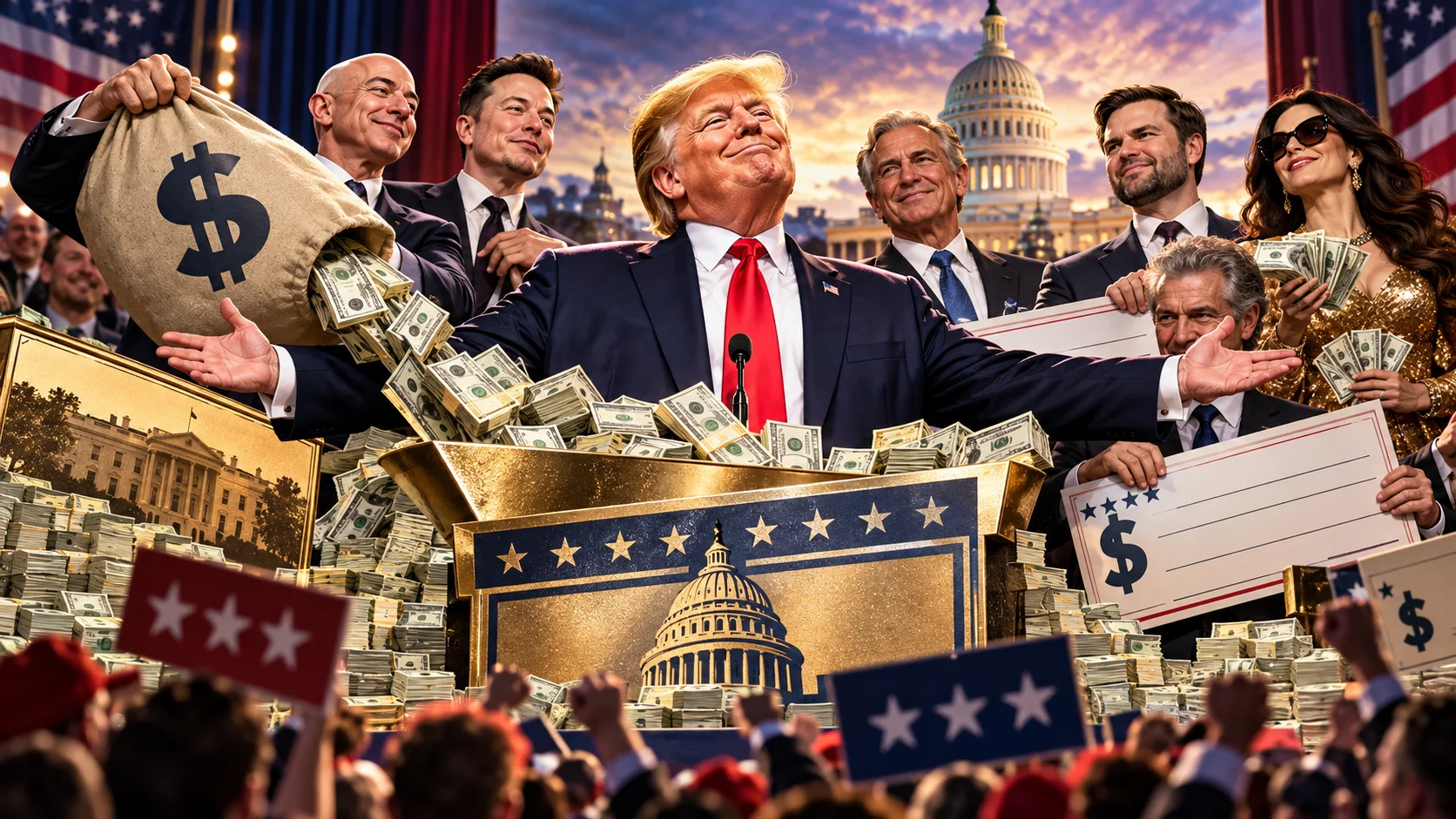
Donald Trump has spent much of his political career portraying himself as a master negotiator. A businessman so brilliant, apparently, that other countries just hand him luxury aircraft worth hundreds of millions of dollars.
And in May 2025, Qatar did precisely that.
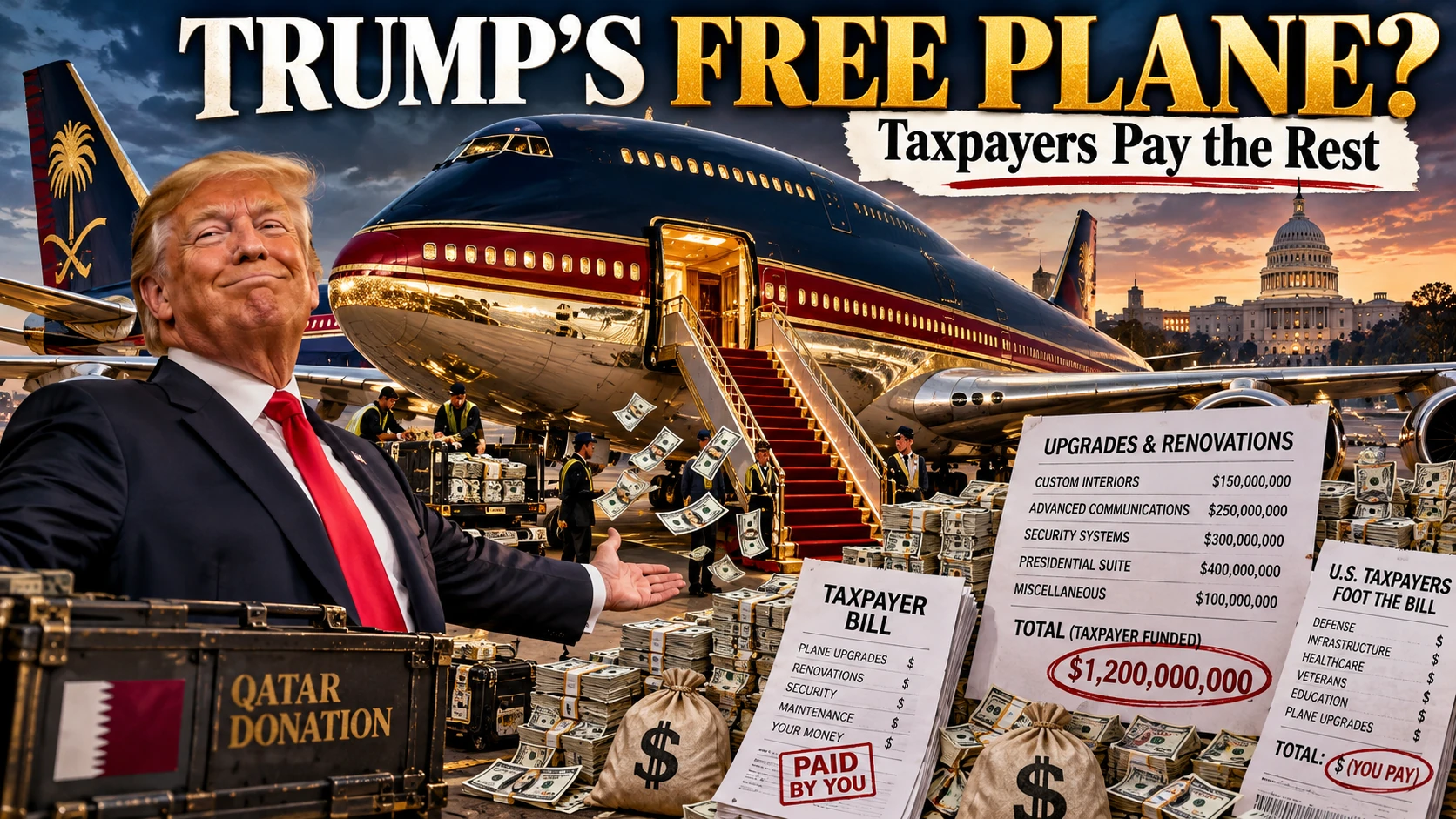
The Qatari royal family provided the United States with a Boeing 747-8, valued at approximately $400 million, intended to serve as an interim Air Force One.
Trump enthusiastically defended accepting the aircraft, suggesting that refusing such an expensive gift would be foolish.
What could possibly be wrong with getting a $400 million airplane for free?
Well, quite a lot, as it turns out.
Because the airplane itself might have been free, but turning a foreign royal family’s luxury jet into an aircraft capable of transporting the president of the United States is another matter entirely.
And the bill doesn’t go to Qatar.
It goes to the American government.
Who Is Actually Paying for Trump’s Flying Palace?
Here’s where the promise of a free airplane starts losing some altitude.
In May 2026, Air Force acquisition official William Bailey told lawmakers that the conversion of Qatar’s donated aircraft would cost approximately $400 million.
That’s right. An aircraft valued at $400 million comes with an estimated $400 million conversion bill.
The Air Force has argued that some costs, including certain training and spare-parts expenses, are already included in broader presidential aircraft programs.
Nevertheless, the central fact remains: American public funds are paying to modify the supposedly free aircraft.
Meanwhile, the Pentagon also has to consider the ordinary costs associated with maintaining, securing, operating, and supporting a presidential aircraft. These are government responsibilities, not additional gifts from Qatar.
Trump gets to celebrate the bargain. The taxpayers get to finance the conversion.
The Renovation That Apparently Never Ends
In June 2026, Trump unveiled the refurbished plane, featuring a striking navy-blue, red, and gold exterior.
The aircraft had luxurious interiors, wood paneling, lie-flat seating, and presidential insignia. It was practically an airborne Trump property, minus the giant gold letters on the side.
On July 1, 2026, Trump took his first flight aboard the converted aircraft.
But after all the work, the plane still wasn’t finished.
In July, Trump announced that it would receive additional upgrades. The White House insisted that the aircraft was safe but acknowledged further enhancements were scheduled.
By October 2, ABC News reported that the aircraft was undergoing additional interior work described by an administration source as “cosmetic upgrades.”
Trump had also spoken of further security improvements, although the official did not confirm whether those were included in the latest work.
And here we encounter a question that deserves more attention:
How much additional taxpayer money is being spent on renovations and upgrades after the original conversion?
The publicly reported information does not establish a final, itemized price for the October work. Nor does it establish exactly how much of the additional work is cosmetic versus security-related.
Without those figures, Americans cannot fully assess the total cost of the donated aircraft.
For a president who frequently promises government efficiency, that’s a fairly significant missing detail.
Security Concerns: Luxury First, Full Capabilities Later?
A presidential aircraft isn’t just a luxurious means of transportation.
It is also a flying command center expected to provide secure communications, extensive defensive capabilities, and the ability to support the president during national emergencies.
That makes the conversion of a foreign-owned aircraft particularly sensitive.
In July 2026, CBS News reported that the Secret Service had recommended Trump use an older Air Force One for a departure from Turkey rather than the newly converted Qatari aircraft.
Officials reportedly said the donated aircraft lacked some desired capabilities.
The White House maintained that the aircraft was safe, and the Air Force stated that essential security requirements had been satisfied.
Still, the episode raised an uncomfortable question.
If taxpayers are spending hundreds of millions to transform a luxury airplane into Air Force One, shouldn’t they know whether it provides comparable capabilities to the presidential aircraft it is replacing?
Gold trim is wonderful for interior decoration. It does considerably less to protect against missiles.
Was Money Diverted From Nuclear Modernization?
The controversy extends beyond the aircraft’s price.
In August 2025, Democratic senators raised concerns about reports that funds originally allocated to the Sentinel nuclear missile program could be redirected toward other classified projects, including the Qatari jet’s conversion.
The reports involved approximately $934 million deemed available for reassignment.
That does not mean $934 million was spent on Trump’s airplane. The amount involved a larger funding pool, and the precise amount allocated to the aircraft was not established by those reports.
Nevertheless, the potential use of money from a nuclear modernization program to modify a luxury aircraft prompted calls for greater scrutiny.
The Constitutional Question Nobody Can Ignore
Then there’s the small matter of the United States Constitution.
The Foreign Emoluments Clause restricts federal officials from accepting gifts from foreign governments without congressional consent.
Legal experts have disagreed about whether a plane formally donated to the U.S. government, rather than Trump personally, violates this provision.
Some have argued that government ownership makes the arrangement permissible. Others have warned that the surrounding circumstances, particularly plans involving Trump’s presidential library, create serious constitutional concerns.
No definitive judicial ruling establishing that this particular arrangement violates the Constitution is identified in the reporting reviewed here.
And that leads to perhaps the most interesting part of this entire affair.
Does Trump Get to Keep the Plane?
Originally, Trump indicated that the Qatari aircraft would eventually be transferred to his presidential library.
Think about that arrangement.
Qatar supplies the aircraft.
American taxpayers finance its conversion.
The U.S. government operates and maintains it.
And after Trump’s presidency, the aircraft could potentially end up with a foundation bearing his name.
Quite the retirement souvenir.
However, the situation remains unresolved. In August 2026, a White House official told ABC News that no final decision had been made regarding the aircraft’s future.
On September 14, Democratic Representatives Joe Courtney and Adam Smith introduced legislation intended to prevent taxpayer-funded transfers of the jet outside the Air Force.
That distinction matters. A presidential library is not automatically the same thing as Trump’s personal ownership, and a proposed transfer is not a completed transfer.
But the prospect of handing over an extensively taxpayer-funded government aircraft deserves serious examination.
The Bottom Line: Who Pays for Trump’s Free Air Force One?
The answer is straightforward.
Qatar donated the airplane. American taxpayers are financing its conversion and supporting its operation as a government aircraft.
The original conversion was estimated at approximately $400 million, and subsequent renovation and security work raises further questions about the final bill.
The exact total expenditure, including additional work and long-term operating costs, has not been fully established in the publicly available reporting.
There is a legitimate argument for replacing aging presidential aircraft. Boeing’s delays in delivering two purpose-built replacements created a real operational problem.
But there’s also a legitimate obligation to explain why taxpayers should spend hundreds of millions modifying a donated luxury plane, whether its security capabilities are sufficient, and what ultimately happens to it.
Trump has repeatedly described the aircraft as a remarkable gift, most recently defending the arrangement during campaigning on October 14, 2026.
And perhaps it is a remarkable gift.
Just not necessarily to the American taxpayer.
Because when the government receives a supposedly free $400 million airplane that requires hundreds of millions in public expenditure, the appropriate response probably isn’t a standing ovation.
It’s an itemized invoice.
Sources
- U.S. House of Representatives, May 13, 2026: Congressional questioning of the conversion cost and aircraft capabilities.
- Bloomberg, May 13, 2026: Air Force retrofit cost estimate.
- CBS News, July 10, 2026: Security and operational concerns.
- ABC News, October 2, 2026: Subsequent upgrades.
- House Armed Services Committee Democrats, September 14, 2026: Legislation concerning future aircraft ownership.