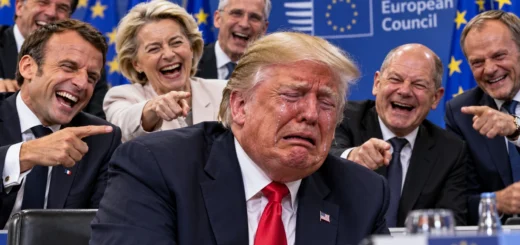
Trump Threatens Europe Over Elon Musk’s Starlink
Apparently, European independence is wonderful, right up until it threatens the profits of Donald Trump’s billionaire friends.
The Trump administration has discovered yet another terrifying threat to American national security: Europe wanting to develop its own technology.
Not Russian aggression. Not Chinese espionage. Not cyberattacks.
European countries wanting greater control over their own satellite communications.
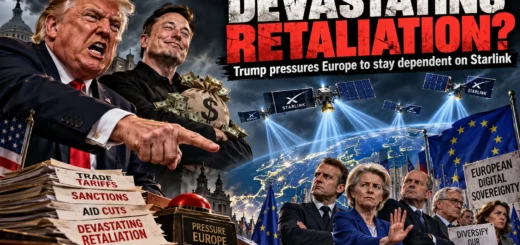
And naturally, Washington’s response is to threaten its supposed allies with potentially “devastating” economic retaliation.
Because nothing says freedom, competition, and the American dream quite like threatening other countries for daring to compete with an American billionaire.
Buy American, or Else!
According to the Financial Times, US Ambassador to the European Union Andrew Puzder warned that European businesses could face devastating consequences if Brussels proceeds with proposals restricting access to certain satellite communication frequencies.
The proposed EU rules would reserve part of the radio spectrum used for direct satellite-to-smartphone communications for European operators.
That could limit access for foreign competitors, including Elon Musk’s SpaceX and its Starlink network, as well as Chinese companies.
Puzder warned that European businesses should recognize the possibility of retaliation, given the enormous importance of the American market.
Let’s translate that diplomatic language:
Nice European economy you’ve got there. Shame if something happened to it.
The administration that endlessly lectures the world about free markets apparently becomes considerably less enthusiastic when the market threatens one of America’s wealthiest entrepreneurs.
Europe’s Crime? Wanting Technological Independence
Europe has increasingly recognized the dangers of depending on foreign corporations for critical infrastructure.
And who could possibly blame it?
Satellite communications are no longer simply about watching Netflix from a remote cabin. They support military operations, emergency communications, national security, and vital civilian infrastructure.
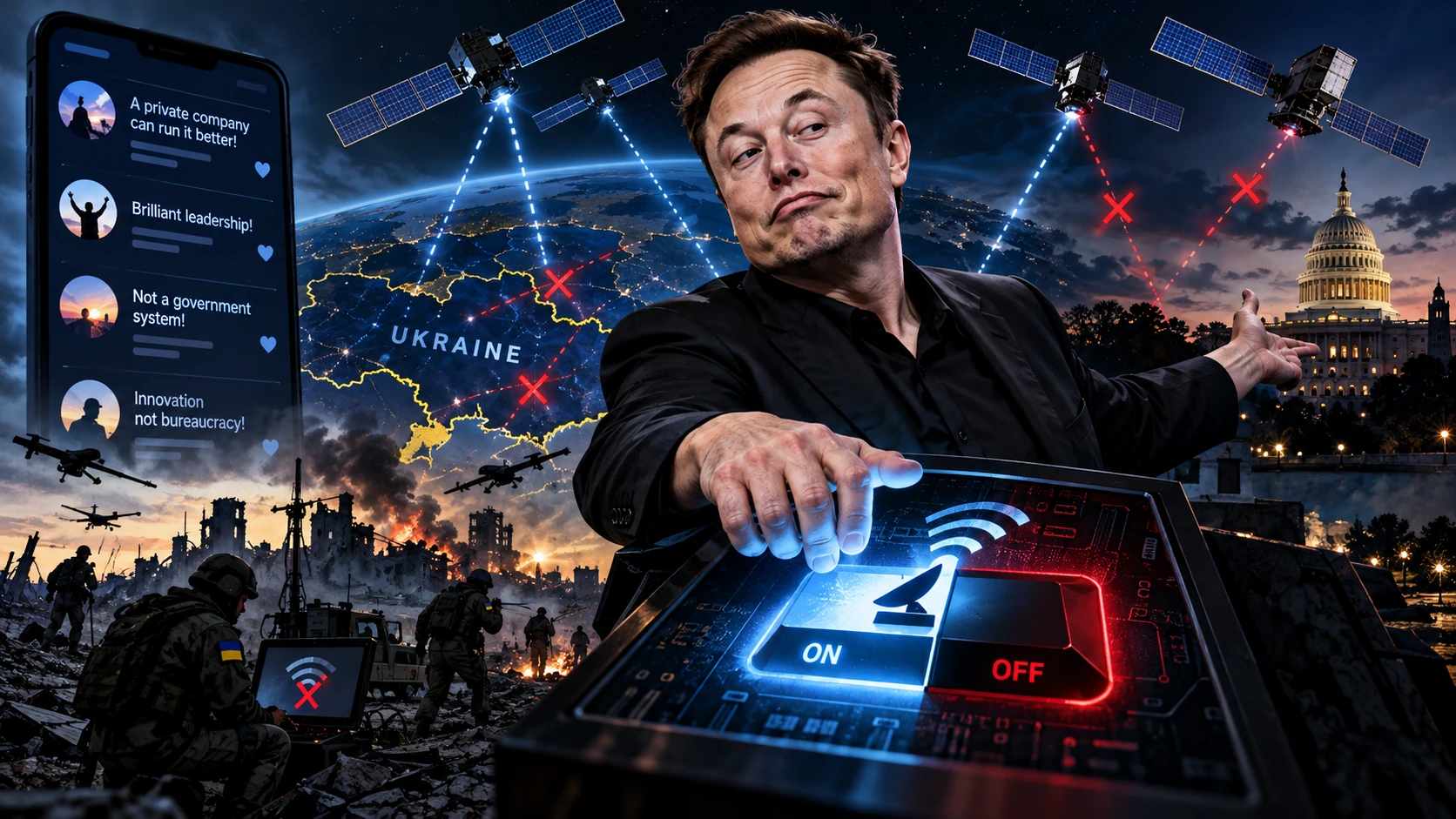
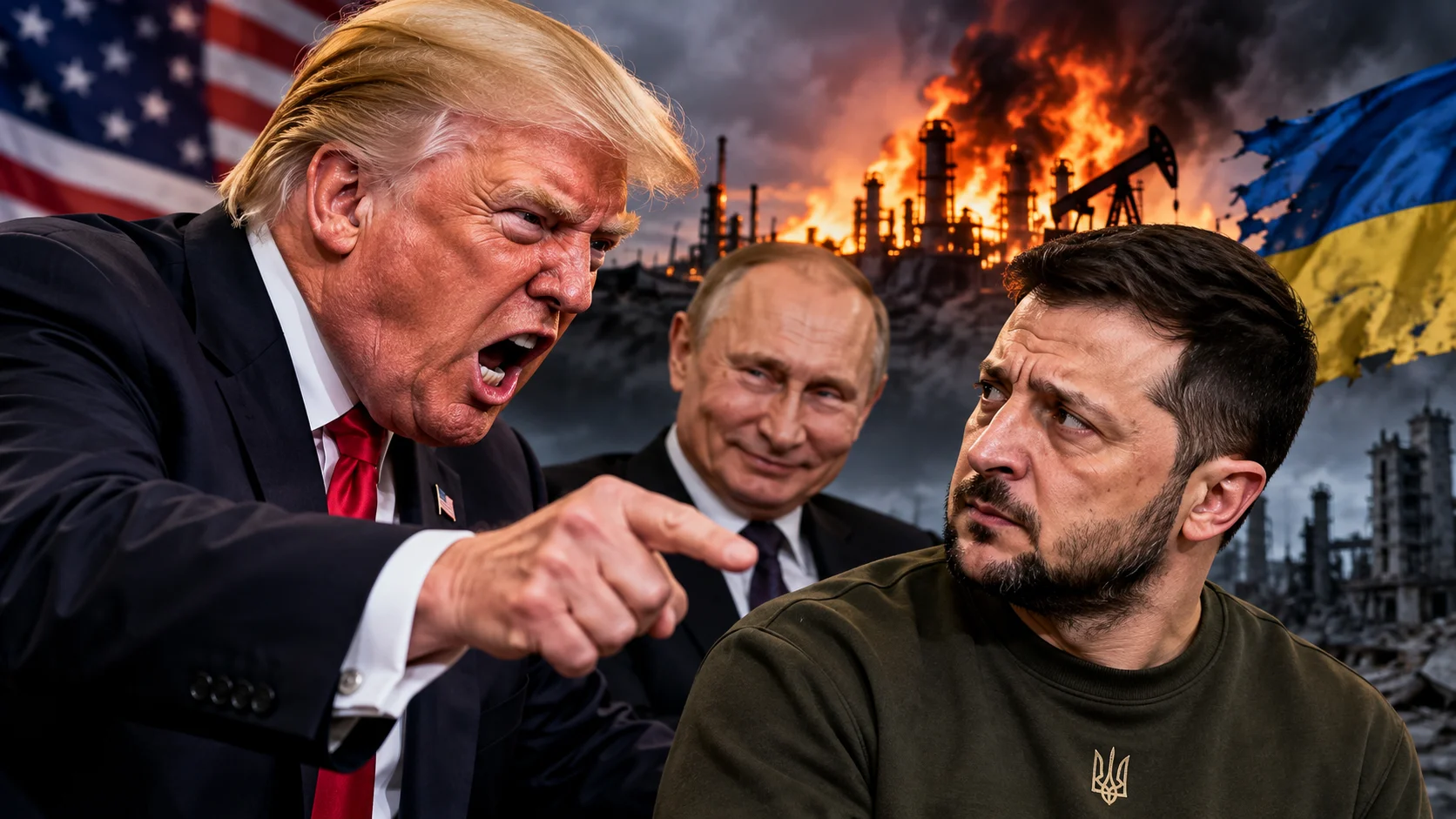
Ukraine has demonstrated precisely how dangerous such dependence can become.
In October 2026, Ukrainian officials reported restrictions affecting SpaceX’s military-grade Starshield satellite service, disrupting important military drone operations.
The Trump administration denied ordering the disruption, while reporting raised questions about Washington’s involvement. The precise responsibility remains disputed.
Regardless of who made the decision, the lesson for Europe could hardly be clearer.
If your national security depends on infrastructure controlled by another government or a private billionaire, your independence has an expiration date.
Elon Musk: The Billionaire Who Apparently Needs Government Protection
Elon Musk has spent years promoting competition, innovation, deregulation, and the supposed virtues of free enterprise.
Yet when Europe attempts to strengthen its own satellite industry, the American government suddenly starts discussing retaliation.
What an extraordinary coincidence.
Musk’s SpaceX operates an exceptionally important satellite network, and Starlink has provided indispensable communications capabilities, particularly in Ukraine.
But technological usefulness shouldn’t translate into permanent commercial entitlement.
Europe has legitimate reasons to establish alternatives, diversify suppliers, and ensure that military communications cannot become bargaining chips during diplomatic disputes.
That isn’t inherently anti-American.
It’s common sense.
Of course, the EU’s specific spectrum proposal also deserves scrutiny. Reserving frequencies for European companies could disadvantage foreign competitors and raise legitimate competition concerns.
But there is an enormous difference between challenging potentially protectionist regulations through negotiations and threatening economic punishment against allies.
Apparently, subtlety wasn’t included in the latest shipment of American diplomacy.
Trump’s Version of Friendship: Depend on Us, But Don’t Question Us
Donald Trump has repeatedly portrayed himself as a defender of American economic interests.
But this latest confrontation exposes a rather uncomfortable contradiction.
For years, Washington has encouraged European allies to assume greater responsibility for their security.
Now that Europe is considering greater technological independence, Washington is threatening consequences.
So which is it?
Should Europe become more self-sufficient, or remain dependent on American companies indefinitely?
The answer increasingly appears to be whichever arrangement benefits Washington at that particular moment.
Trump’s familiar rhetoric about strength, sovereignty, and freedom looks considerably less convincing when those principles apparently stop at the American border.
His administration’s warning also risks reinforcing precisely the concerns driving Europe’s independence efforts in the first place.
If America threatens retaliation merely because Europe explores alternatives, why should European governments trust that dependence won’t be used as leverage again?
Europe Shouldn’t Have to Ask Permission to Be Independent
The irony is almost spectacular.
The Trump administration appears determined to prevent Europe from reducing technological dependence by demonstrating exactly why reducing that dependence might be necessary.
Europe’s emerging satellite alternatives won’t replace Starlink overnight. Developing reliable, competitive infrastructure requires substantial investment, technical expertise, and time.
But the longer-term strategic argument is increasingly difficult to ignore.
The United States has every right to advocate for fair treatment of its companies.
Europe has every right to protect its security interests and cultivate domestic technological capabilities.
And Elon Musk has every right to compete for European customers.
What he shouldn’t have is an American administration threatening European businesses with devastating consequences whenever his commercial dominance faces a challenge.
A healthy alliance is built on cooperation, trust, and mutual respect, not threats delivered on behalf of billionaires.
Perhaps Washington should consider a revolutionary diplomatic strategy:
Let Europe choose its own technology.
And let Elon Musk compete for customers without expecting the White House to serve as his personal customer-retention department.